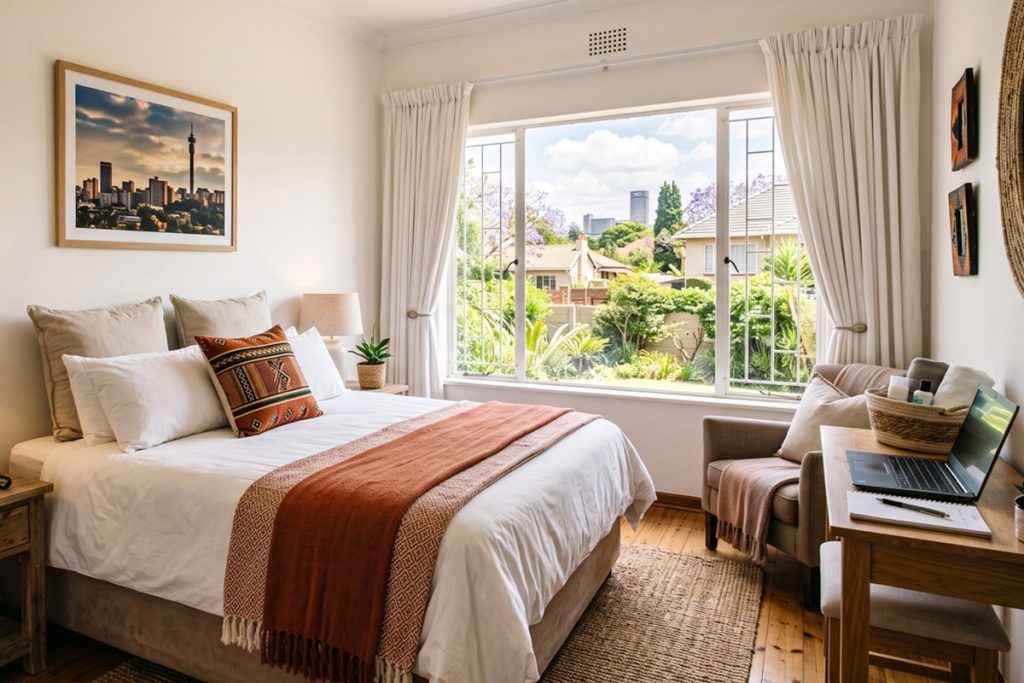
An Airbnb host in Johannesburg typically earns between R12,000 and R45,000 in gross monthly revenue, with high-end properties in prime suburbs generating upwards of R65,000 per month during peak periods. Actual net earnings depend on specific location, property type, occupancy consistency, and whether the property offers reliable backup power.
Average Airbnb Earnings Across Johannesburg Neighbourhoods
Earnings fluctuate significantly based on neighbourhood appeal, Gautrain access, and proximity to major commercial centres. Sandton, Rosebank, and surrounding northern suburbs command the highest average daily rates, driven by corporate business travellers, medical tourists, and international visitors.
High-Demand Rental Zones
Different suburbs cater to distinct guest demographics, impacting nightly rates and overall yield:
- Sandton and Rosebank: Studio and one-bedroom apartments earn between R15,000 and R30,000 monthly, with nightly rates averaging R850 to R1,600 due to Gautrain connectivity and business demand.
- Parkhurst, Greenside, and Linden: Character garden cottages and family homes generate R16,000 to R35,000 monthly, favoured by local leisure visitors and extended-stay remote workers.
- Midrand and Waterfall City: Modern lock-up-and-go units yield R12,000 to R25,000 per month, sustained by conference attendees and corporate project teams.
- Bryanston and Fourways: Spacious two to three-bedroom properties bring in R28,000 to R55,000 per month from visiting families, corporate relocations, and group bookings.
Key Factors Determining Your Johannesburg Rental Income
Nightly pricing and occupancy rates depend heavily on how well your property caters to the specific expectations of travellers in Gauteng. Hosts who benchmark their units against top-performing listings on regional short-term rental portals in Gauteng regularly maintain higher calendar utilisation.
Guest reviews reflect specific local conveniences, and properties lacking essential amenities quickly lose ranking on search algorithms. Investing in core infrastructure ensures consistent bookings throughout the year.
Properties that outperform the market standard consistently provide several vital features:
- Uninterrupted power systems: Installing an inverter, battery setup, or solar solution prevents power cuts from ruining guest experiences and protects your five-star review score.
- Fast, reliable fibre internet: High-speed connectivity with uninterruptible power supply routers attracts high-paying corporate guests and digital nomads.
- Strict security measures: Secure off-street parking, smart lock self-check-in, 24-hour security guards, and electric fencing remain top decision factors for guests booking in Johannesburg.
- Professional interior styling: Modern furnishings, premium bedding, and high-quality photography directly drive higher click-through rates and booking conversions.
Understanding Operating Costs and Net Profit Margins
Gross rental revenue does not equal take-home profit. Running a profitable short-term rental requires accounting for fixed and variable expenses before calculating your real return on investment.
Core Operational Expenses
Every host must manage ongoing overheads to keep the property clean, functional, and legal:
- Cleaning and laundry: Turnover cleaning costs between R350 and R700 per stay, an expense normally covered by setting an appropriate guest-facing cleaning fee.
- Municipal services and utilities: Water, electricity, refuse, and fibre internet consume R2,000 to R4,500 monthly depending on property size and guest usage.
- Guest supplies and upkeep: Coffee, tea, toiletries, minor repairs, and linen replenishment require R1,000 to R2,000 per month.
- Management fees: Professional management services charge between 15% and 22% of revenue to oversee day-to-day hosting, maintenance, and rate optimisation.
For property owners who want passive revenue without managing guest communications, vetting reliable professionals is a sensible step. Learn how to identify trustworthy operators by reading our guide on selecting top short-term rental management teams in the city.
Tactics to Increase Your Annual Occupancy
Johannesburg experiences seasonal shifts, with peak business travel between February and November and leisure influxes over event weekends. Filling empty calendar dates requires proactive calendar management.
Successful hosts rely on several proven strategies to keep revenue consistent month after month:
- Implement flexible rate strategies: Adjust nightly prices to match local demand spikes around major concerts, sporting events at FNB Stadium, and trade expos.
- Offer extended stay discounts: Encourage bookings of seven days or longer with targeted discounts to reduce turnover costs and eliminate midweek vacancies.
- Secure repeat corporate accounts: Build direct relationships with companies frequently sending staff to Johannesburg for training or consulting.
Professional Short-Term Rental Solutions With CTHA
CTHA delivers end-to-end management services for property investors across South Africa. From listing creation and automated pricing to 24-hour guest communication, professional housekeeping, and routine maintenance, CTHA handles every aspect of your rental. Partnering with experienced professionals turns your property into a high-yielding, hands-off asset that consistently beats local market averages. Click the button below to partner with CTHA today.
FAQs
What is the average occupancy rate for an Airbnb in Johannesburg?
Well-managed properties in prime suburbs like Sandton, Rosebank, and Melville maintain occupancy rates between 55% and 72% across the year. Lower-performing listings or properties without backup power often struggle around 35% to 45%.
Is Airbnb more profitable than long-term renting in Johannesburg?
In high-demand suburbs, short-term rentals frequently outperform standard 12-month leases by 30% to 60% in gross revenue. After deducting operating costs, net profits remain significantly higher provided the property achieves at least 50% monthly occupancy.
How much do Johannesburg hosts spend on backup power?
A basic inverter and lithium battery system capable of powering Wi-Fi, television, lighting, and device charging costs between R15,000 and R30,000. Full solar setups for entire homes range from R60,000 to R150,000, but they allow hosts to charge higher nightly rates.
Do I need a special licence to run an Airbnb in Johannesburg?
Sectional title schemes and homeowners associations establish their own body corporate rules regarding short-term rentals. You must ensure your building allows short stays, and you must declare all rental revenue to the South African Revenue Service as taxable income.