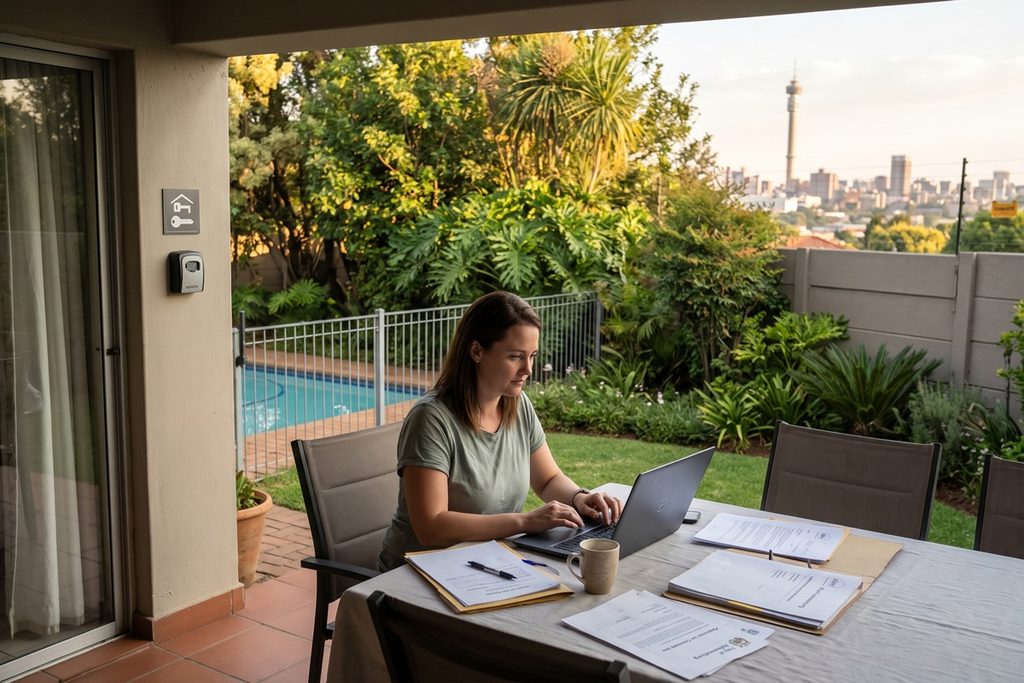
You do not need a dedicated municipal trading licence simply to list an apartment or house on Airbnb in Johannesburg, but you do need legal permission depending on your property type and zoning. If your property sits inside a sectional title complex or a gated estate, you must obtain permission from the body corporate or homeowners association before welcoming paying guests. Furthermore, free-standing homes operated as full-time commercial guest houses must comply with City of Johannesburg land use schemes, municipal health bylaws, and national tax obligations.
City of Johannesburg Land Use and Municipal Bylaws
The City of Johannesburg Land Use Scheme regulates how properties are occupied and commercialised. Most suburban properties in areas like Rosebank, Sandton, Melville, and Linden carry a Residential 1 zoning. Under standard Residential 1 rules, short-term letting of an entire home as an occasional rental is generally tolerated, provided the primary character of the property remains residential. When an owner rents out multiple guest suites, serves meals, or constructs standalone guest units, the municipality classifies the operation as a bed-and-breakfast or guest house, which requires formal council consent.
Zoning Categories and Land Use Consent
If you intend to convert a residential property into a permanent, multi-room accommodation business, you must apply to the City of Johannesburg Planning Department for consent use or rezoning. Running an unauthorised hospitality business can trigger municipal enforcement, formal cease-and-desist notices, and fines. Before calculating your expected returns and reviewing potential host revenue across Johannesburg neighbourhoods, confirm that your current title deeds and zoning allow short-term visitor turnover.
Health and Safety Standards
Regardless of whether formal rezoning is required, every host must satisfy baseline municipal safety and public health requirements. The City of Johannesburg enforces specific standards for residential properties accommodating paying guests:
- Compliant fire safety measures, including serviced fire extinguishers, smoke detectors, and clearly marked emergency exits
- Strict adherence to municipal noise control regulations, which penalise excessive disturbance after 22:00
- Adequate on-site parking to prevent guests and visitors from obstructing suburban streets or pavements
- Reliable utility backup, particularly solar or battery systems to maintain lighting and security during regional load-shedding events
Body Corporate Rules and Sectional Title Approvals
Sectional title schemes and homeowner estates in Gauteng enforce their own binding conduct rules under the Sectional Titles Schemes Management Act. This is where most Johannesburg hosts face immediate legal friction. Even if municipal bylaws permit home letting, a body corporate has the legal right to restrict or completely ban short-term rentals to protect resident security and residential amenity.
Checking Scheme Conduct Rules
Before spending money on furnishings, staging, or marketing, request a copy of the registered conduct rules from your scheme managing agent or trustees. Some complexes allow short-term letting with strict conditions, while others prohibit leases under six months or one year. Breaching these rules leads to body corporate penalties, access bans for guests, and legal action.
When reviewing body corporate rules, check for clauses covering these specific areas:
- Minimum rental durations, such as mandatory 30-day minimum stays that rule out weekend bookings
- Guest registration protocols, including advance submission of identification and vehicle registration numbers at the security gate
- Explicit bans on parties, public drinking, or the use of communal clubhouse facilities by short-stay visitors
- Penalties and escalation processes applied to owners when guests trigger noise complaints or violate security rules
SARS Tax Compliance and National Tourism Regulations
Every South African resident operating a short-term rental must declare rental profits to the South African Revenue Service (SARS). Income generated through platforms like Airbnb forms part of your taxable income and must be reported on your annual tax return. Allowable deductions, such as cleaning fees, municipal rates, platform charges, and property management fees, can be subtracted from your gross earnings to calculate your net taxable profit.
If your total taxable turnover from short-term rentals and other trading activities exceeds one million Rand in any consecutive twelve-month period, you must register for Value-Added Tax (VAT). In addition, keep track of national initiatives by the Department of Tourism. While a proposed national host registration database has been gazetted, a mandatory national licensing scheme for casual hosts has not yet taken full effect across Gauteng. Proper financial and regulatory administration requires keeping orderly records of all property expenses:
- Invoices for cleaning, linen replenishment, maintenance, and recurring utility bills
- Statements showing platform commission fees and local booking levies
- Documentation showing professional property management rates in the city to claim accurate operational expense deductions
- Valid Certificates of Compliance (CoCs) for all electrical, gas, and electric fencing installations
Step-by-Step Approval Checklist for Johannesburg Hosts
Setting up your rental correctly saves thousands of Rand in potential fines and dispute resolution. Whether you plan to market a studio in Braamfontein or list a family residence in Bryanston to explore listings on Gauteng Airbnbs, follow a systematic approach to approvals.
- Inspect your title deed for restrictive conditions that limit business activity or temporary lodging on the erf
- Secure written approval from your body corporate trustees or estate committee if your unit sits in a communal development
- Confirm with the City of Johannesburg Development Planning Department if your operation triggers consent-use requirements
- Notify your short-term insurance provider that the property accommodates paying guests, ensuring your policy covers commercial liability and malicious damage
Let CTHA Manage Your Airbnb
Meeting municipal guidelines, managing sectional title disputes, and maintaining top-tier guest operations can consume hours of your week. CTHA manages every aspect of your Johannesburg rental, from regulatory compliance guidance and guest screening to 24/7 communications, linen turnover, and dynamic revenue optimisation. We ensure your property stays strictly compliant with local rules while producing maximum yields. Click the button below to receive an operational assessment.
FAQs
Can my body corporate fine me for hosting on Airbnb?
Yes. If the registered conduct rules of your sectional title scheme prohibit short-term letting, trustees can issue administrative fines to your levy account. In persistent cases, the body corporate can refer the matter to the Community Schemes Ombud Service (CSOS) or obtain an interdict against you.
Do I need a special business licence for an Airbnb in a standalone house?
For an ordinary standalone home let as a whole unit, you do not need a commercial trading licence. However, if you rent out several individual guest rooms simultaneously, employ hospitality staff, or run a commercial bed-and-breakfast, you must apply to the City of Johannesburg for consent use under the local zoning scheme.
Do I need to pay income tax on my Johannesburg Airbnb revenue?
Yes. SARS treats short-term rental revenue as taxable income. You must declare all earnings on your annual income tax return, though you can deduct legitimate operating expenses such as cleaning, platform fees, repairs, insurance, and management fees from your gross turnover.
What happens if a guest throws a party and violates municipal bylaws?
As the property owner, you remain legally responsible for disturbances emanating from your erf. The Johannesburg Metropolitan Police Department (JMPD) can issue spot fines for public nuisance and noise violations. You should install certified noise monitoring hardware, enforce strict house rules, and vet guests in advance to avoid problems.