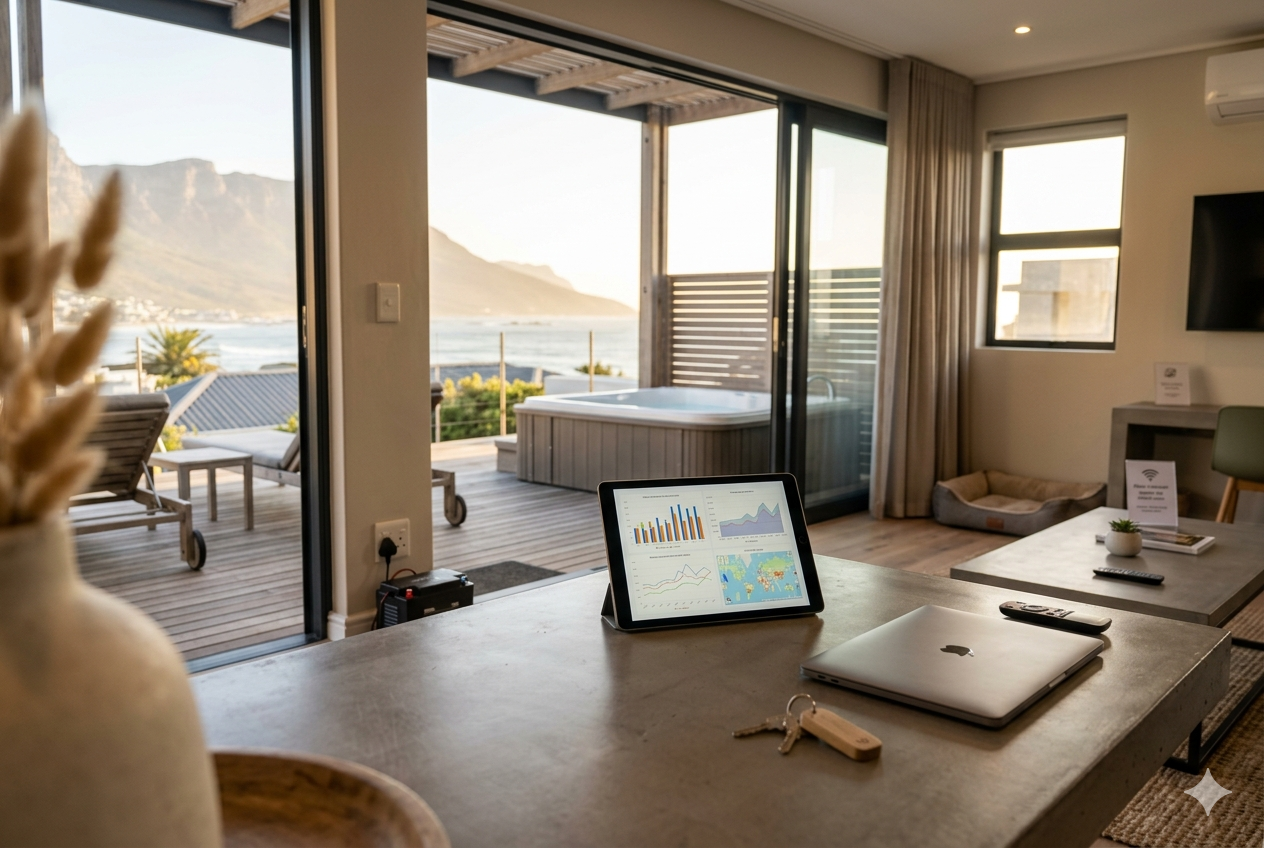
You increase profit by systemising three core areas: pricing, occupancy, and guest experience. It starts with replacing flat rates with data-driven dynamic pricing to maximise revenue per booking.
Then, you must optimise your listing’s technical elements to increase its visibility in Airbnb’s search algorithm. The bottom line is that higher profit margins come from a combination of maximising revenue through intelligent pricing and securing more bookings via search optimisation.
Mastering Dynamic Pricing: Moving Beyond Flat Rates
Static, year-round pricing is a direct path to lost revenue. Your rate strategy must adapt to real-time market signals, including local demand, competitor availability, and seasonality, to maximise profit. Relying on guesswork or even Airbnb’s “Smart Pricing” often results in under-pricing, as the platform’s algorithm prioritises occupancy over your maximum potential revenue.
Third-party dynamic pricing tools offer a significant advantage by analysing vast datasets to inform your rates. Platforms like PriceLabs, Beyond, and Wheelhouse integrate with your calendar to automate price adjustments based on dozens of factors. Studies have shown that hosts using these tools can increase revenue by 15% to 40%. These systems work by:
- Analysing hyper-local demand data, not just city-wide averages.
- Tracking competitor pricing and occupancy to keep your rates competitive.
- Adjusting for local events, holidays, and seasonal demand shifts.
The primary function of these tools is to close the gap between your base rate and the maximum amount a guest is willing to pay for specific dates, a feat nearly impossible to achieve with manual adjustments.
Capitalising on Local Events and Seasonality
Your pricing must reflect the unique demand of the South African market. Major events like the Cape Town Cycle Tour, music festivals, or international conferences create massive spikes in demand that justify significant rate increases.
Conversely, during the off-season, a different strategy is required. Instead of just lowering rates, consider offering discounts for longer stays or reducing minimum night requirements to attract different types of travellers and fill gaps in your calendar. Monitoring competitor calendars can reveal their occupancy patterns, helping you to price more effectively during these slower periods.
Optimising Your Listing for High Conversion
Profitability is directly tied to your listing’s performance within the Airbnb search algorithm. The system prioritises listings that not only match a guest’s search criteria but are also likely to result in a booking. Key factors influencing your rank include guest satisfaction scores, booking conversion rates, and host responsiveness.
Crafting a Click-Worthy Title and Description
Your title is the first point of contact and must include key amenities that guests are searching for. Mentioning features like “Fast Fibre,” “Load-shedding Ready,” or “Private Pool” directly in the title can improve your click-through rate.
The description should be easy to scan, using bullet points to highlight the most important features. Focus on what makes your property stand out, such as a dedicated workspace for remote workers or family-friendly items.
The ROI of Professional Photography
High-quality photos are a non-negotiable investment. Listings with professional images receive more attention from the algorithm and from potential guests. Data indicates a direct correlation between the number of photos and occupancy rates, with listings featuring over 40 photos seeing a notable jump in bookings. Ensure your images are well-lit and accurately represent the space to build trust and avoid disappointing guests, which can lead to poor reviews.
High-Value Amenities that Justify Premium Rates
Strategic investment in specific amenities can directly translate into higher nightly rates and increased occupancy by aligning your property with current guest search filters. High value additions that act as revenue magnets include the following:
- Reliable backup power solutions to ensure continuity during load shedding events
- Private hot tubs or swimming pools that allow for premium pricing
- Pet friendly policies that open your listing to a less competitive guest segment
- Electric vehicle chargers to cater to the growing market of eco conscious travelers
- Dedicated workspaces with ergonomic furniture for remote workers seeking longer stays
- High speed fiber internet with clearly stated upload and download speeds
- Smart locks that facilitate secure and convenient self-check in at any hour
By incorporating these essential features and modern technologies, you ensure your listing remains visible and competitive in a crowded marketplace.
Operational Efficiency: Reducing Overhead Costs
Maximizing profit requires a dual focus on increasing revenue and rigorously controlling expenses to improve your net profit margin. By implementing Property Management Software (PMS), you can automate routine guest communications such as booking confirmations, check-out instructions, and critical local information like directions or load-shedding schedules.
This operational streamlining not only saves significant time but also ensures a consistent, professional experience that drives better reviews while reducing the overhead costs associated with manual management.
Strategic Minimum Stay Requirements
High guest turnover increases costs, so encouraging longer stays through weekly or monthly discounts can improve profitability. Strategically adjusting minimum stay requirements by lowering them during the off-season to fill gaps and increasing them during peak periods allows you to maximize revenue while reducing administrative burdens.
Revenue Diversification and Upselling Strategies
Revenue diversification involves framing upsells as valuable enhancements to the guest experience rather than aggressive sales tactics. You can unlock new income streams by offering curated local experiences, such as private chef services or equipment rentals, or by implementing convenient paid options like early check-ins, late check-outs, and luggage storage.
Additionally, providing high-value add-ons like pre-stocked pantries or welcome baskets filled with local South African products creates a premium feel that increases your total revenue per booking while deepening the guest’s connection to the destination.
The Path to Superhost Status: Why Reputation is Your Best Asset
Achieving Superhost status provides a badge on your listing that signals trust and quality to potential guests, which can lead to increased visibility and bookings. While there is no direct payment for being a Superhost, the benefits are tangible.
To qualify, you must meet specific criteria evaluated by Airbnb every quarter. These include:
- Hosting at least 10 stays in the past year (or 100 nights over at least 3 stays).
- Maintaining a response rate of 90% or higher.
- Having a cancellation rate of less than 1%.
- Achieving an overall rating of 4.8 or higher.
Consistently meeting these metrics requires a focus on excellent guest communication and a high-quality, clean, and accurately described property.
Data-Driven Decision Making: Tracking Key Metrics
Managing your Airbnb as a scalable business requires moving beyond intuition to track key performance indicators (KPIs). The most vital metrics are your Average Daily Rate (ADR), which measures pricing effectiveness, and your Occupancy Rate, which typically averages around 55% for well-run South African listings. By monitoring these, you can gauge how well your property is performing against regional benchmarks and market demand.
The most comprehensive measure of success, however, is Revenue Per Available Room (RevPAR), calculated by multiplying your ADR by your occupancy rate. Regularly analyzing this data allows you to account for both pricing and vacancies simultaneously. This data-driven approach ensures you can identify emerging trends and make informed strategic adjustments to maximize your property’s overall profitability.
Next Steps: Get a Technical Audit of Your Listing
Your pricing, amenities, and listing presentation are all data signals that determine your profit. We can analyse your property’s performance against the local market to identify specific opportunities for revenue growth. Let us audit your listing and build a strategy based on data, not guesswork.
Our detailed assessment will provide you with actionable insights to refine your competitive positioning and ensure your property remains compliant with the latest platform standards. Click the button below to get a quote for a comprehensive technical audit.
FAQs
How profitable is an Airbnb on average in South Africa?
The average monthly revenue for an Airbnb in South Africa ranges from R20,000 to R25,000, but this varies significantly by location. After expenses, the net profit for most listings is between R5,000 and R40,000 per month, with hosts who self-manage typically achieving net profit margins of 50% to 70%. In Johannesburg, the average monthly net profit is between R3,000 and R6,500.
What is a good profit margin for a short-term rental?
A good profit margin for a self-managed short-term rental in South Africa is typically between 50% and 70% of gross revenue before income tax. For properties managed by a third-party company, this margin is lower, usually between 25% and 40%, due to management fees.
How can I increase my Airbnb ranking in search results?
To improve your search ranking, focus on factors the Airbnb algorithm prioritises: high guest satisfaction scores, fast host response times, and a high booking conversion rate. Enabling Instant Book, maintaining a low cancellation rate, ensuring your listing is complete with high-quality photos, and using competitive pricing will also boost your visibility.
Does becoming a Superhost actually increase profit?
Yes, indirectly. Superhost status acts as a powerful signal of trust and quality, which can increase your listing’s visibility and booking rate. While Superhosts don’t receive direct financial bonuses, the enhanced credibility and search placement that come with the badge often lead to higher occupancy and, consequently, increased revenue.